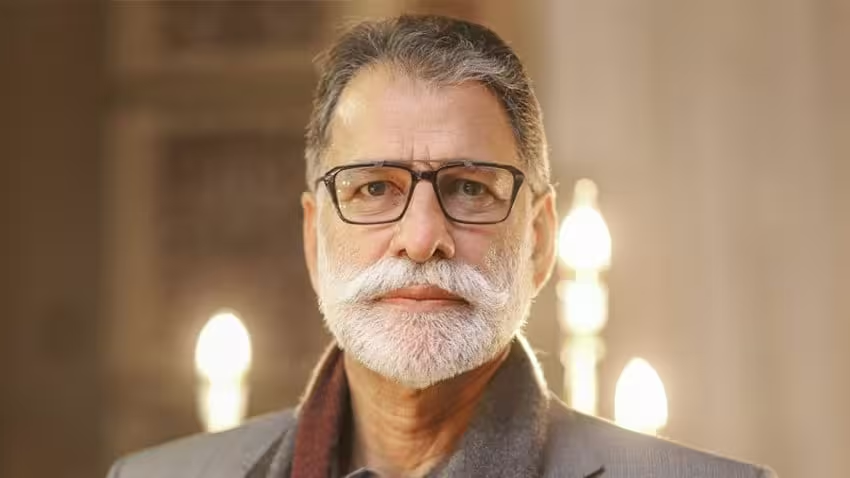
ISLAMABAD / MUZAFFARABAD, July 7, 2026: Pakistan Tehreek-e-Insaf chairman Barrister Gohar Ali Khan has indicated that the party may reconsider its decision to boycott the July 27 Azad Jammu and Kashmir Legislative Assembly elections if the authorities provide a free, peaceful and politically conducive environment.
The statement comes days after PTI announced that it would stay away from the polls, citing the worsening political situation in AJK, arrests of political workers, restrictions on media coverage, unrest across the region and continuing uncertainty over the party’s electoral symbol.
According to available reports, Gohar said PTI could review its boycott if a genuine level playing field is provided and if party leaders and workers are not subjected to arrests, harassment or crackdowns during the election process.
PTI’s position has placed fresh pressure on the election process in AJK, where the July 27 polls are already taking place under the shadow of public anger, civil resistance and the continuing fallout from the Joint Awami Action Committee-led movement. The AJK Election Commission announced the July 27 election schedule in early June.
The party had earlier described its boycott as a decision taken in solidarity with the people of AJK rather than as a routine political tactic. PTI’s AJK leadership said the environment was not suitable for credible elections while the region was facing unrest, administrative pressure and restrictions on political activity.
For many in AJK, the question is not merely whether one party contests or boycotts the election. The larger concern is whether the coming polls can reflect the genuine will of the people while a major grassroots civil rights movement faces bans, arrests and forceful state action.
The political atmosphere has been tense since protests led by the Joint Awami Action Committee expanded across AJK. Reuters reported in June that towns in Pakistan-administered Kashmir were paralysed by shutdowns after strikes called by the recently banned civil society alliance, with authorities responding through arrests, road closures, internet restrictions and limited media access.
Human rights concerns have also grown. Amnesty International has criticised the use of anti-terror laws against the JAAC movement, describing the terrorism designation as a dangerous escalation in the crackdown on a grassroots movement advocating economic and political rights in AJK. The rights group also raised concern over mass arrests, internet shutdowns and the use of force against protesters.
PTI has also pointed to legal uncertainty over its status and electoral symbol in AJK. Reports said the AJK Election Commission had earlier moved against the party’s registration and symbol, while the AJK High Court later restored PTI’s registration and ordered the reinstatement of the bat symbol.
The dispute over PTI’s participation has added another layer of uncertainty to an already fragile electoral environment. If the party maintains its boycott, the legitimacy of the polls may be questioned by PTI supporters and sections of the public who already believe the election is being held amid fear and coercion. If it returns to the contest, PTI will likely demand assurances on political freedom, arrests, campaign access, media coverage and the security of candidates and workers.
The election is also being watched closely because of the wider debate over representation in AJK. One of the core issues raised by JAAC is the presence of 12 Assembly seats reserved for refugees from Indian-administered Jammu and Kashmir living in Pakistan. JAAC and many Kashmiri activists argue that these seats allow non-resident voters to influence the political future of people living inside AJK, while supporters of the existing system defend it as part of the wider Kashmir dispute.
In this environment, Gohar’s remarks appear to leave the door open for a conditional return to the electoral process. But PTI’s message is clear: elections cannot be treated as credible if they are held amid arrests, media restrictions, fear, unresolved legal disputes and the suppression of civil rights voices.
For AJK’s people, the coming days will determine whether the July 27 vote becomes a meaningful democratic exercise or another contested political event held under the weight of unrest and mistrust.
Kashmiri civil society voices continue to call for dialogue, protection of peaceful political activity, due process for detainees, restoration of civil liberties and an election environment in which every party, candidate and voter can participate without pressure.
You may also like
-
Shaukat Nawaz Mir Yet to Be Produced Before Court, Family Denied Access Since Arrest, JKJAAC Says
-
PML-N Leads PaJK Elections Amid Boycott, Rigging Allegations, Violence and Major Political Upsets
-
Muzaffarabad Shuts Down as Clashes and Roadblocks Disrupt Election-Day Movement
-
Civilian Death Toll in PaJK Protests Rises Above 87 as Two More Killed
-
At Least 37 Civilians Killed by Pakistani Security Forces in PaJK in Two Days