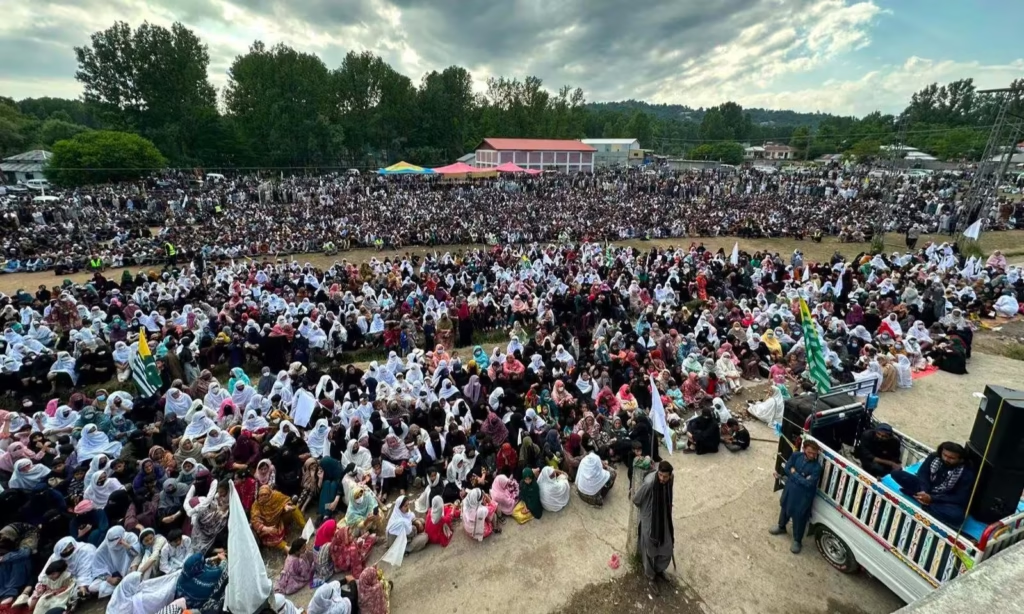
Muzaffarabad, July 4, 2026: The Jammu Kashmir Joint Awami Action Committee has called for a march on Muzaffarabad on July 5, as tensions continue across Azad Jammu and Kashmir following weeks of protests, arrests and a government crackdown on the civil rights alliance.
The fresh call comes after JAAC core member Sardar Aman Khan appealed to people across Jammu, Kashmir, Ladakh, Poonch, Rajouri, Gilgit-Baltistan and the Kashmiri diaspora to show solidarity with protesters on July 5. In a video message reported by media, Khan urged people to join demonstrations against what he described as repression and denial of basic rights in Pakistan-administered Kashmir.
The July 5 mobilisation follows the arrest of prominent JAAC leader Shaukat Nawaz Mir, who has been one of the movement’s most visible faces in Muzaffarabad. Associated Press reported that Mir, head of the banned JAAC, was arrested this week and faces sedition charges linked to earlier protests. Dawn reported earlier that confusion had surrounded his arrest, while activists claimed he had been taken into custody and officials initially avoided on-record confirmation.
Mir, a former president of Muzaffarabad’s traders’ body, rose to prominence through the JAAC protest movement and became one of its main spokesmen. Dawn reported that he had represented nearly 10,000 shopkeepers through the “one shop, one vote” traders’ body system before emerging as a leading figure in the rights movement.
The current unrest is rooted in JAAC’s longstanding demands, including subsidised wheat flour, reduced electricity tariffs, and the abolition of 12 seats in the AJK Legislative Assembly reserved for refugees from Indian-administered Jammu and Kashmir settled in Pakistan. The group argues that these seats allow outside influence in the region’s political process, while authorities say the seats are constitutionally protected.
Tensions escalated sharply in June after the AJK government declared JAAC a proscribed organisation under the region’s anti-terrorism law. Amnesty International criticised the move, calling it a dangerous escalation and saying the authorities had used internet shutdowns, mass arrests and deadly force during the crackdown.
Earlier, JAAC had planned a long march from Bhimber to Muzaffarabad and a sit-in outside the Legislative Assembly. Dawn reported on June 9 that the administration said it would not allow the march to proceed, while security personnel were deployed in Muzaffarabad ahead of the anticipated rally.
The June protests turned deadly after clashes in Rawalakot. Reuters reported that at least 11 people were killed in clashes between protesters and security forces, while AP reported that businesses and transport across the region shut down during a strike called by JAAC.
Authorities have accused JAAC leaders of inciting violence, while the committee and its supporters have blamed the administration for suppressing peaceful political activity. Reuters reported that sedition cases were ordered against four prominent JAAC figures and that a Rs10 million reward had been announced for their arrest. AP named Shaukat Nawaz Mir and Mehran Arshad Khawaja among the prominent leaders facing sedition charges.
The AJK government has said it remains open to talks but has ruled out a blanket amnesty for JAAC leaders. Dawn reported that AJK Chief Secretary Khushal Khan and Inspector General of Police Liaqat Ali Malik held JAAC leaders responsible for recent deaths and violence, while Prime Minister Faisal Mumtaz Rathore has repeatedly urged the group to return to negotiations.
With the July 5 march call, Muzaffarabad is expected to remain on alert. Local residents fear further disruption to transport, markets and communication services if the standoff continues. Civil society voices have urged both sides to avoid violence and return to dialogue.
The coming day is likely to test whether the authorities and JAAC leadership can prevent another escalation in a region already shaken by weeks of unrest, arrests and competing claims over political rights, representation and public welfare.
You may also like
-
Shaukat Nawaz Mir Yet to Be Produced Before Court, Family Denied Access Since Arrest, JKJAAC Says
-
PML-N Leads PaJK Elections Amid Boycott, Rigging Allegations, Violence and Major Political Upsets
-
Muzaffarabad Shuts Down as Clashes and Roadblocks Disrupt Election-Day Movement
-
Civilian Death Toll in PaJK Protests Rises Above 87 as Two More Killed
-
At Least 37 Civilians Killed by Pakistani Security Forces in PaJK in Two Days