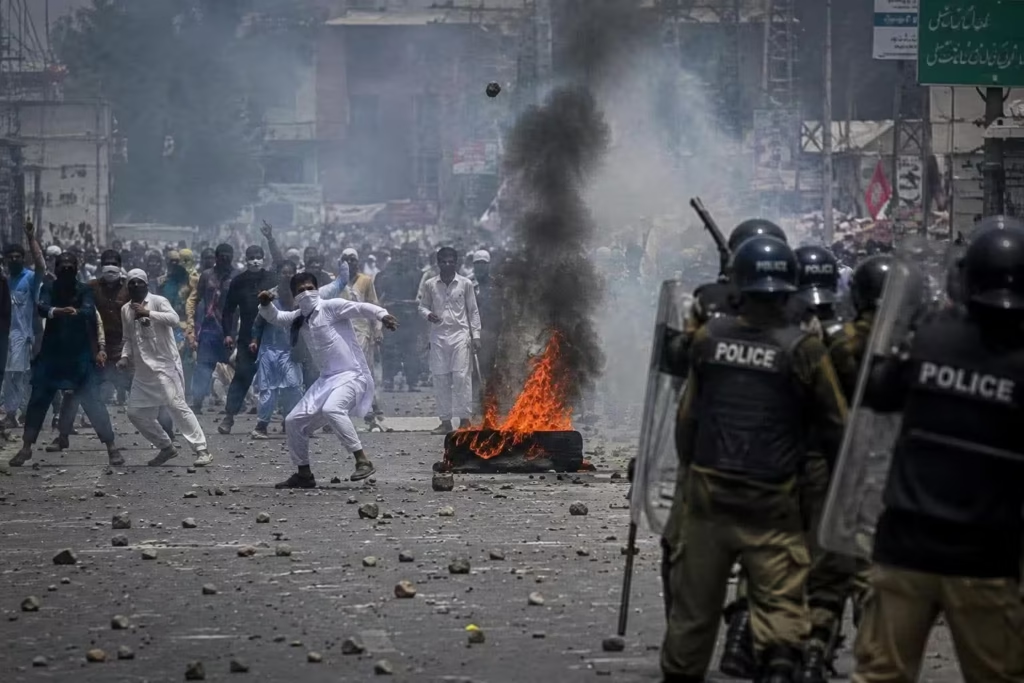
MUZAFFARABAD: The death toll from the past 38 days of sit-ins, protests, clashes and security operations linked to the Jammu Kashmir Joint Awami Action Committee (JKJAAC) movement has crossed 41, according to local tallies compiled from protest organisers, residents and reports from affected districts across Pakistan-administered Jammu Kashmir.
Hundreds of people have also reportedly been detained during the past month as authorities intensified security operations, road blockades, arrests and restrictions following the region-wide protest movement.
The latest casualties were reported from Poonch Division between Monday night and Tuesday morning, where at least five more people were reported killed in separate incidents in Baloch, Rawalakot and nearby areas. Local sources said the deaths occurred as security forces advanced towards protest sit-ins ahead of the JKJAAC’s announced July 15 long march towards Muzaffarabad.
The latest reported deaths have further raised the overall toll in what has become one of the deadliest protest movements in recent years in Pakistan-administered Jammu Kashmir.
Independent verification of each death remains difficult because of restricted access, road closures, communication disruptions and the absence of regular official updates from the authorities. However, international media had already reported heavy casualties during the earlier phase of the unrest. Reuters reported on June 19 that at least 24 people had been killed over two weeks of protests, including 20 civilians and four police officers, while more than 500 people had been detained.
The unrest began after protests and sit-ins led by the JKJAAC expanded across several districts. The movement initially raised demands related to electricity prices, subsidised wheat flour and inflation, but later widened its campaign to include governance reforms, political representation, reduction of official privileges, constitutional questions and opposition to the 12 legislative seats reserved for Kashmiri refugees residing in Pakistan.
Earlier in June, clashes in Pakistan-administered Jammu Kashmir killed at least 11 people and injured more than 70, according to Reuters and Al Jazeera reports at the time. Dawn also reported that at least seven civilians were killed during a clash between police and newly proscribed JAAC protesters in Rawalakot, while four law enforcement personnel were also killed.
The authorities later declared the JKJAAC a banned organisation under anti-terrorism laws. The committee rejected the ban, maintaining that it is a public rights movement representing people’s economic and political demands. The Associated Press reported that the government deployed additional security forces, suspended internet services and detained dozens of supporters after the ban, while officials said they remained willing to negotiate on some issues but not on constitutionally protected matters such as the reserved refugee seats.
Human rights organisations have expressed concern over the handling of the protests. Amnesty International said the authorities’ response included an internet shutdown, mass arbitrary arrests and deadly use of force, describing the designation of the protest movement under terrorism laws as a dangerous escalation.
According to local reports gathered during the latest phase of unrest, casualties have been reported from multiple areas, including Rawalakot, Baloch, Kotli, Jandala, Shujaabad, Trarkhel and other parts of Poonch Division. Several seriously injured people have reportedly been shifted to hospitals in Rawalakot, Bagh, Palandri and Rawalpindi.
Local activists and JKJAAC-linked figures say the overall death toll has now crossed 41, while hundreds remain detained or have been taken into custody across Pakistan-administered Jammu Kashmir during the past month. These figures have not been fully confirmed by the government, and no consolidated official casualty list has been released.
The rising death toll has intensified calls from human rights defenders, lawyers, civil society groups and residents for an independent investigation into the use of live ammunition, the arrest of protesters, restrictions on communication and the handling of sit-ins across the region.
The latest violence comes just ahead of the JKJAAC’s planned July 15 long march towards Muzaffarabad, announced after the expiry of the committee’s July 8 deadline for negotiations with the authorities.
As of Tuesday morning, tensions remained high across Poonch Division and several other parts of Pakistan-administered Jammu Kashmir. Roads were reportedly blocked in multiple areas, security forces continued patrolling, and residents said movement between towns remained severely affected.
No comprehensive official statement had been issued on the total casualties, detentions or the latest reported deaths at the time of publication.
You may also like
-
Shaukat Nawaz Mir Yet to Be Produced Before Court, Family Denied Access Since Arrest, JKJAAC Says
-
PML-N Leads PaJK Elections Amid Boycott, Rigging Allegations, Violence and Major Political Upsets
-
Muzaffarabad Shuts Down as Clashes and Roadblocks Disrupt Election-Day Movement
-
Civilian Death Toll in PaJK Protests Rises Above 87 as Two More Killed
-
At Least 37 Civilians Killed by Pakistani Security Forces in PaJK in Two Days