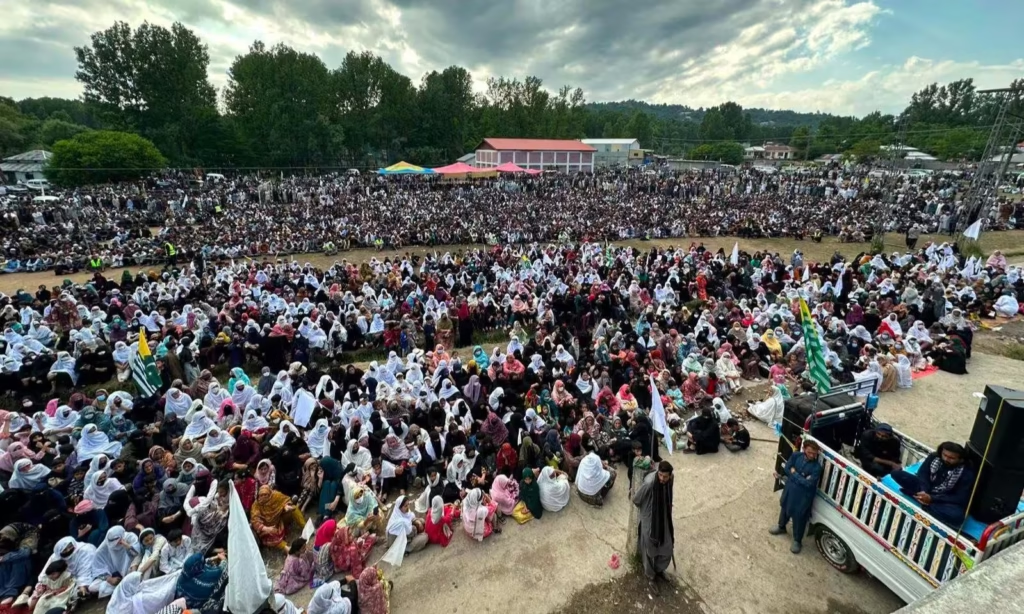
MUZAFFARABAD: Weeks after renewed demonstrations spread across Pakistan-administered Jammu and Kashmir (PaJK), the Jammu Kashmir Joint Awami Action Committee (JKJAAC) has maintained pressure on the government, insisting that unresolved constitutional and governance issues remain at the centre of the movement ahead of the region’s upcoming elections.
While the movement first gained momentum around economic grievances, including electricity tariffs and the rising cost of living, its focus has increasingly shifted towards structural reforms. Protest leaders are demanding greater transparency in governance, reduced privileges for political officeholders, increased local control over public resources, and the abolition of 12 seats in the Azad Jammu and Kashmir Legislative Assembly reserved for refugees from Jammu and Kashmir residing in Pakistan.
The reserved seats have emerged as one of the movement’s most contentious demands. JKJAAC argues that representatives elected by people living outside the territory continue to influence legislation and government formation in PaJK, despite not residing there. Protest leaders say the arrangement undermines local democratic representation and should be reviewed before elections.
Authorities, however, maintain that the seats are protected under the region’s constitutional framework and cannot be removed without a constitutional amendment. Government officials have also stated that while dialogue remains open, changes of this nature require legislative and constitutional procedures rather than executive decisions.
The latest demonstrations have also drawn attention to wider questions surrounding governance in the territory. Analysts say the movement reflects longstanding debates over political accountability, regional autonomy, public resource management and the relationship between the PaJK administration and Pakistan’s federal government.
Security measures remain in place in several parts of the region following earlier clashes between protesters and law enforcement. Human rights organisations, including Amnesty International, have expressed concern over reports of arrests, restrictions on assembly and internet disruptions during the protests. Pakistani authorities have defended their actions as measures aimed at maintaining public order and ensuring security.
Despite periodic contacts between government representatives and protest leaders, no comprehensive agreement has been announced on the constitutional demands. With elections approaching, observers say the handling of the governance dispute is likely to remain one of the defining political issues in Pakistan-administered Jammu and Kashmir over the coming weeks.
You may also like
-
Shaukat Nawaz Mir Yet to Be Produced Before Court, Family Denied Access Since Arrest, JKJAAC Says
-
PML-N Leads PaJK Elections Amid Boycott, Rigging Allegations, Violence and Major Political Upsets
-
Muzaffarabad Shuts Down as Clashes and Roadblocks Disrupt Election-Day Movement
-
Civilian Death Toll in PaJK Protests Rises Above 87 as Two More Killed
-
At Least 37 Civilians Killed by Pakistani Security Forces in PaJK in Two Days